

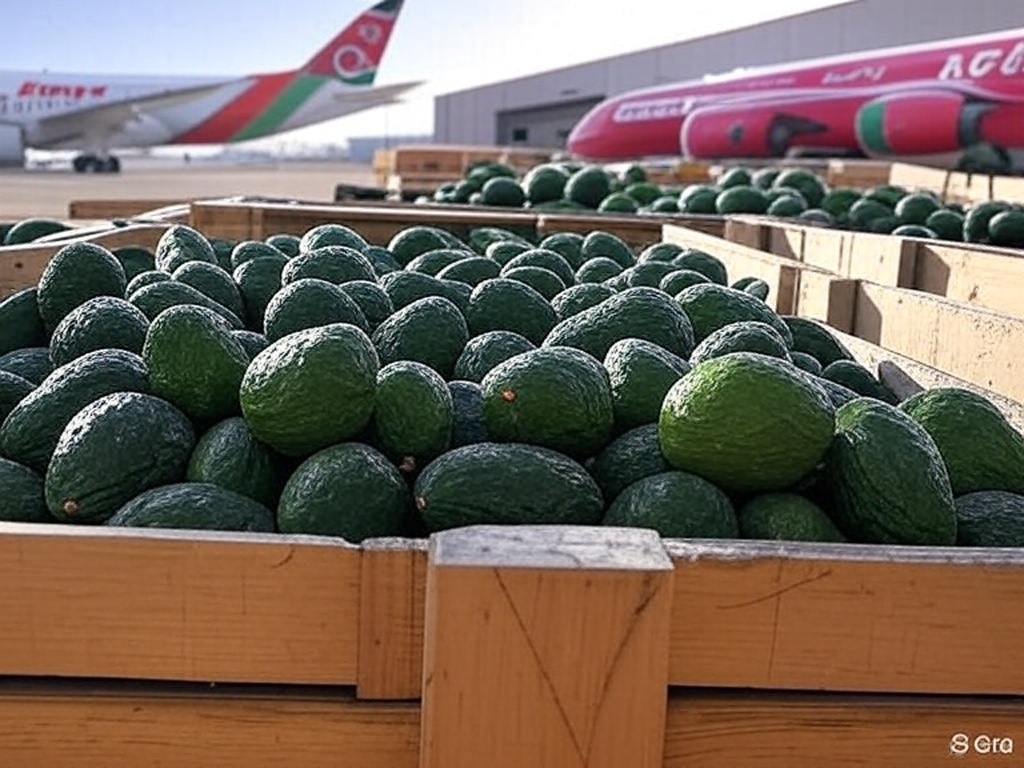
Air vs. Sea: Why Heavy-Duty Pallets Give Exporters Flexibility When Harvest Timelines Shift
The phone call every exporter dreads: your agronomist reports that unseasonable rains have accelerated ripening by three weeks, or unexpected drought has delayed harvest by a month. Suddenly, your carefully planned sea freight schedule is worthless. Your buyers are waiting. Your contracts have delivery windows. And you have hours, not days, to decide whether to absorb the crushing cost of air freight or risk losing premium markets entirely.
Climate variability has transformed agricultural export logistics from a predictable science into a high-stakes balancing act. Traditional harvest calendars—once reliable guides for planning shipping schedules months in advance—are increasingly obsolete. Exporters face a new reality: the ability to pivot quickly between air and sea freight is no longer a luxury; it’s a survival requirement.
But here’s what most exporters don’t realize until it’s too late: your logistics flexibility is only as strong as your weakest link. And for fresh produce exporters, that weak link is often sitting right in your warehouse—inadequate pallets that work for sea freight but fail catastrophically when you need to pivot to air cargo. Deka Kraft’s heavy-duty pallets solve this critical vulnerability, giving exporters true multi-modal flexibility when harvest timelines shift unexpectedly.
The New Reality: Climate Variability and Harvest Unpredictability
Agricultural exporters worldwide are experiencing a fundamental shift in how harvests unfold. Understanding these changes is essential for building resilient logistics strategies.
How Weather Patterns Are Disrupting Traditional Harvest Windows
Climate variability manifests in multiple ways that directly impact export planning:
- Erratic Rainfall Patterns: Unexpected wet seasons accelerating fruit ripening, while prolonged dry spells delay maturity by weeks or months
- Temperature Fluctuations: Unseasonable heat waves triggering early harvests, or unexpected cold snaps extending growing seasons
- Extreme Weather Events: Storms, hail, or flooding forcing emergency harvests to salvage crops before total loss
- Shifting Seasonal Boundaries: Traditional harvest months becoming less predictable year-over-year
- Regional Variations: Neighboring farms experiencing different conditions, creating staggered harvests that complicate logistics planning
The Economic Impact of Mistimed Shipments
When harvest timing shifts, the financial consequences cascade rapidly:
- Market Window Misses: Premium prices available only during specific weeks; late arrivals mean 30-50% lower returns
- Contract Penalties: Fixed delivery dates with substantial financial consequences for delays
- Quality Deterioration: Delayed shipping of perishables resulting in rejections, downgrades, or total losses
- Market Oversupply: Compressed harvest windows flooding markets simultaneously, depressing prices
- Buyer Relationships: Consistent delivery failures eroding trust and jeopardizing future contracts
A single mistimed shipment can wipe out an entire season’s profit margin. Exporters who survive and thrive are those who can adapt their shipping strategy within 24-48 hours of harvest schedule changes.
Case Study: The Cost of Inflexibility
Consider a typical scenario affecting avocado, mango, and flower exporters across East Africa:
An exporter plans sea freight for a 500-tonne harvest scheduled for mid-April, targeting European markets for the May demand peak. Container space is booked, documentation prepared, buyers confirmed. Then March brings unexpected rainfall—harvest accelerates to late March. The sea freight arrives mid-May, missing the premium price window. Result: USD 150,000-200,000 in lost revenue on that single shipment.
With logistics flexibility, the same exporter could have pivoted: ship 200 tonnes via air to hit the premium window, use sea freight for the remainder. The air freight premium costs USD 80,000-100,000 more than sea—but captures premium pricing worth USD 200,000-250,000 additional revenue. Net benefit: USD 100,000-150,000.
The difference? Exporters with true multi-modal flexibility can execute this pivot. Those constrained by inadequate pallets cannot.
Understanding Air Freight vs. Sea Freight: Critical Differences
Air and sea freight impose dramatically different demands on pallets and packaging. Recognizing these distinctions is essential for building adaptable export infrastructure.
Sea Freight Requirements and Challenges
Sea freight advantages:
- Cost Efficiency: Significantly lower per-kilo rates, typically 80-90% cheaper than air
- Large Volume Capacity: Ability to ship 20-40 foot containers with thousands of kilos
- Controlled Environment: Reefer containers maintaining precise temperatures throughout journey
- Established Routes: Predictable schedules and mature logistics networks
Sea freight challenges:
- Extended Transit Times: 3-6 weeks from East Africa to Europe, limiting perishable product options
- Inflexible Schedules: Container booking deadlines weeks in advance, difficult to accommodate sudden harvest changes
- Handling Intensity: Multiple loading/unloading cycles, container stacking forces, vessel movement stresses
- Port Delays: Congestion and customs processing adding unpredictable time to delivery schedules
- Quality Risk: Longer exposure time increasing potential for temperature excursions or equipment failures
Air Freight Requirements and Challenges
Air freight advantages:
- Speed: 24-72 hour delivery from origin to destination markets
- Flexibility: Daily flights allowing rapid response to changing harvest schedules
- Premium Quality: Minimal handling and transit time preserving peak freshness
- Market Timing: Ability to hit precise premium price windows
- Reduced Spoilage: Shorter journey minimizing quality deterioration risks
Air freight challenges:
- High Cost: 5-10x more expensive than sea freight per kilogram
- Weight Restrictions: Every kilogram counts; heavy pallets directly reduce profitable payload
- Dimensional Constraints: Strict size limits for aircraft cargo holds
- Handling Stresses: Rapid loading/unloading, conveyor belt impacts, acceleration/deceleration forces
- Pressure Changes: Altitude-induced stress on packaging and pallet integrity
- Vibration: Continuous aircraft vibration over hours requiring stable, rigid platforms
The Pallet Compatibility Challenge
Standard pallets often work adequately for one mode but fail catastrophically in the other:
- Lightweight Pallets: May survive sea freight but collapse under air freight acceleration forces and rapid handling
- Heavy-Built Pallets: Withstand sea freight abuse but add prohibitive weight costs to air shipments
- Poor Construction: Splits, cracks, or separates during the intensive handling both modes demand
- Dimensional Issues: Too large for air cargo holds or inefficient for container utilization
Exporters without properly engineered pallets face an impossible choice: maintain separate pallet inventories for each mode (expensive, complex) or accept that one shipping method is unavailable when needed most (strategically crippling).
Deka Kraft’s Solution: Engineered for Multi-Modal Excellence
Deka Kraft’s heavy-duty pallets are specifically engineered to excel in both air and sea freight environments, giving exporters genuine flexibility when harvest schedules shift.
Strength-to-Weight Optimization
The fundamental challenge: maximum strength with minimum weight. Our engineering approach delivers both:
- Strategic Material Selection: Premium hardwoods chosen for superior strength-to-weight ratios
- Optimized Deck Design: Precise board thickness and spacing maximizing strength while minimizing excess material
- Reinforced Critical Points: Additional support at high-stress areas without unnecessary bulk
- Advanced Joinery: Connections engineered to distribute loads efficiently across the structure
- Weight Efficiency: 20-30% lighter than comparable strength pallets from conventional manufacturing
For air freight, this translates to more profitable payload per shipment. For sea freight, it means handling efficiency and reduced shipping costs. In both cases, structural integrity never compromises.
Dynamic Load Performance
Both air and sea freight subject pallets to extreme dynamic forces. Deka Kraft pallets are tested to withstand:
- Impact Resistance: Forklift contact, conveyor belt drops, and cargo shifting during turbulence
- Acceleration Forces: Aircraft takeoff/landing stress and rapid cargo vehicle movements
- Vibration Endurance: Continuous oscillation during air transport and sea vessel movement
- Stacking Pressure: Multi-level container loading and warehouse storage configurations
- Repeated Handling Cycles: Multiple loading/unloading operations without structural degradation
Environmental Resilience
Multi-modal shipping exposes pallets to diverse environmental conditions:
- Temperature Extremes: From tropical warehouse heat to refrigerated cargo holds to high-altitude cold
- Humidity Variations: Moisture-rich coastal air to pressurized aircraft cabin conditions
- Pressure Differentials: Sea-level warehouses to high-altitude cargo holds
- Condensation Exposure: Temperature transitions creating moisture accumulation
- Salt Air Exposure: Coastal port and ocean transport corrosion factors
Deka Kraft’s heat treatment process and wood selection ensure pallets maintain structural integrity across this entire environmental spectrum, eliminating the risk of warping, splitting, or weakening during transit.
Universal ISPM 15 Compliance
Whether shipping by air or sea, international phytosanitary standards apply uniformly. Every Deka Kraft pallet includes:
- Full ISPM 15 Certification: Heat treatment documentation accepted worldwide
- Clear Permanent Marking: Stamps remaining legible through handling intensity of both modes
- Complete Documentation: Certificates ready for customs clearance at any destination
- Quality Traceability: Batch tracking ensuring compliance verification when needed
- Ongoing Compliance Monitoring: Regular audits maintaining certification integrity
This universal compliance means exporters never waste time verifying pallet acceptability when pivoting between shipping modes—the same pallets work seamlessly for both.
Strategic Advantages: How Multi-Modal Pallets Create Competitive Edge
Beyond operational convenience, multi-modal pallet capability delivers strategic business advantages that directly impact profitability and market position.
Rapid Response to Market Opportunities
Markets move fast. Premium price windows open and close within days. Exporters with multi-modal flexibility can:
- Capture Premium Pricing: Air freight high-value portions during peak demand, sea freight remainder
- Respond to Spot Opportunities: When buyers need urgent shipments, you can deliver while competitors cannot
- Diversify Market Access: Serve distant markets requiring air freight alongside nearby markets using sea
- Test New Markets: Use air freight for market trials before committing to sea freight volumes
- Manage Buyer Relationships: Offer expedited delivery options for premium customers
Risk Mitigation Through Diversification
Single-mode dependency creates vulnerability. Multi-modal capability provides insurance:
- Port Disruptions: When sea freight faces delays, pivot critical shipments to air
- Airline Cancellations: Backup sea freight options when air schedules change unexpectedly
- Weather-Related Delays: Route around disruptions using alternative transport modes
- Capacity Constraints: When one mode is overbooked, shift to the other without operational changes
- Cost Fluctuations: Optimize shipping method based on current rate environments
Operational Simplification
Managing separate pallet inventories for different shipping modes creates complexity and cost. Deka Kraft’s multi-modal pallets eliminate this burden:
- Single Inventory: One pallet type serves all shipping needs, reducing procurement complexity
- Simplified Training: Staff learn one pallet system, not multiple specialized processes
- Reduced Errors: Eliminate mistakes from grabbing wrong pallet type for shipment mode
- Better Space Utilization: No segregated storage zones for different pallet categories
- Streamlined Documentation: Single certification and compliance package for all shipments
Financial Flexibility and Planning
Multi-modal capability transforms financial planning from rigid predictions to dynamic optimization:
- Profit Maximization: Allocate products to shipping modes based on real-time price-to-cost ratios
- Cost Control: Balance expensive air freight against cheaper sea based on margin requirements
- Revenue Stability: Diversified shipping reduces weather-driven revenue volatility
- Investment Efficiency: Capital invested in pallets serves dual purpose rather than mode-specific waste
- Contract Confidence: Secure fixed-price contracts knowing you can adapt shipping to meet commitments
Decision Framework: When to Choose Air vs. Sea Freight
With multi-modal pallets in place, exporters can make shipping decisions based on business factors rather than infrastructure limitations. Use this framework to optimize mode selection.
Air Freight Indicators
Choose air freight when:
- Time Sensitivity: Premium market windows justify higher transport costs
- High-Value Products: Margins support 5-10x freight premium (e.g., cut flowers, premium fruits)
- Extreme Perishability: Product shelf-life incompatible with sea freight transit times
- Contract Urgency: Delivery deadlines impossible to meet via sea
- Market Testing: Small trial shipments to new buyers or markets
- Early Harvest: Unexpected crop maturity when sea freight isn’t positioned
- Premium Positioning: Building reputation for freshness and quality worth transport premium
Sea Freight Indicators
Choose sea freight when:
- Cost Optimization: Lower margins require minimal freight expense
- High Volume: Tonnes of product justify container efficiency
- Longer Shelf-Life: Products tolerate 3-6 week transit (e.g., avocados, certain vegetables)
- Flexible Timing: Market windows allow extended delivery schedules
- Established Routes: Reliable schedules align with harvest timing
- Reefer Advantage: Controlled temperature critical and available via containers
- Bulk Markets: Serving processors, retailers with storage capacity vs. immediate sales
Hybrid Strategies
Smart exporters often combine modes strategically:
- Grade-Based Split: Air freight premium grades, sea freight standard grades
- Market-Based Allocation: Air to distant/premium markets, sea to nearby/cost-sensitive markets
- Temporal Sequencing: Early harvest air freight capturing premium prices, later harvest sea freight
- Volume Balancing: Air freight peak demand periods, sea freight shoulder seasons
- Buyer-Specific Service: Premium customers receive air service, standard customers sea
Real-Time Decision Factors
When harvest timing shifts, evaluate these factors within 24-48 hours:
- Current Market Pricing: What premium is available for immediate delivery vs. delayed arrival?
- Freight Rate Environment: How much is current air vs. sea pricing differential?
- Product Quality Trajectory: How many additional days of shelf-life exist?
- Contract Obligations: What penalties or bonuses hinge on delivery timing?
- Capacity Availability: Which mode has accessible space on optimal schedules?
- Volume on Hand: How much product requires shipment within what timeframe?
- Working Capital: Can you absorb air freight costs before payment receipt?
Implementation Guide: Building Multi-Modal Export Capability
Transitioning to multi-modal export infrastructure requires strategic planning. Follow this roadmap for successful implementation.
Phase 1: Infrastructure Assessment (3-4 Months Before Peak Season)
- Audit Current Pallet Inventory: Identify pallets suitable for air freight, sea freight, or neither
- Calculate Volume Requirements: Project pallet needs for both modes based on historical data and growth plans
- Evaluate Warehouse Capabilities: Ensure handling equipment compatible with multi-modal operations
- Review Logistics Partnerships: Confirm relationships with both air and sea freight forwarders
- Assess Financial Capacity: Model working capital requirements for flexible shipping decisions
Phase 2: Procurement and Preparation (2-3 Months Before Peak)
- Order Deka Kraft Heavy-Duty Pallets: Place orders with adequate lead time for manufacturing
- Develop Decision Protocols: Create clear frameworks for mode selection during harvest shifts
- Train Staff: Educate teams on multi-modal pallet handling, marking, and documentation
- Establish Monitoring Systems: Implement weather tracking and harvest prediction tools
- Negotiate Freight Agreements: Secure capacity with carriers for both air and sea options
Phase 3: Testing and Refinement (1 Month Before Peak)
- Conduct Trial Shipments: Test pallets in both air and sea configurations
- Validate Documentation: Ensure ISPM 15 certificates clear customs smoothly for both modes
- Refine Workflows: Optimize processes based on trial shipment insights
- Stress-Test Decision Making: Run scenarios of harvest timing changes and practice rapid pivots
- Confirm Readiness: Final verification all systems, partnerships, and inventory in place
Phase 4: Operational Excellence (During Season)
- Monitor Harvest Progression: Daily tracking of crop maturity and weather impacts
- Track Market Dynamics: Real-time pricing intelligence for both destination markets and freight rates
- Execute Rapid Decisions: Apply decision framework when harvest timing shifts occur
- Document Performance: Record outcomes of mode choices for continuous improvement
- Maintain Communication: Keep buyers, freight partners, and internal teams aligned on changes
Return on Investment: Quantifying Multi-Modal Flexibility Value
Multi-modal pallet investment delivers measurable financial returns through multiple channels. Understanding these benefits helps justify the strategic shift.
Direct Cost Savings
- Eliminated Dual Inventory: No separate pallet stocks for different modes saves 30-40% of pallet capital
- Reduced Replacement Costs: Superior durability means 3-5x longer pallet lifespan
- Lower Product Damage: Fewer pallet failures translate to 1-2% reduction in product loss
- Simplified Operations: Single pallet system reduces training, handling, and inventory management costs
- Weight Efficiency: Optimized strength-to-weight ratios reduce air freight payload costs
Revenue Enhancement
- Premium Price Capture: Ability to hit optimal market windows increases revenue 15-30% on time-sensitive shipments
- Market Expansion: Access to air freight-dependent markets opens new revenue streams
- Contract Performance: Meeting delivery commitments protects long-term supply agreements worth millions
- Buyer Premiums: Reliability earns preferred supplier status with better pricing power
- Spot Opportunity Capture: Ability to respond to urgent buyer requests generates bonus revenue
Risk Mitigation Value
- Disruption Insurance: Alternative shipping options prevent total loss when one mode fails
- Climate Adaptation: Capacity to respond to unpredictable weather protects against total season failures
- Contract Security: Delivery flexibility reduces legal exposure from breach penalties
- Reputation Protection: Consistent performance safeguards brand value in competitive markets
- Financial Stability: Diversified revenue streams reduce cash flow volatility
Example ROI Calculation
Medium-sized exporter (2,000 tonnes annual volume):
Investment: 1,500 Deka Kraft heavy-duty pallets @ KES 1,800 each = KES 2,700,000
Incremental cost vs. standard pallets: ~KES 900,000
Year 1 Benefits:
- Premium capture (3 harvest shifts, 150 tonnes air vs. sea): +KES 1,800,000
- Reduced product damage (1.5% improvement): +KES 450,000
- Lower replacement costs: +KES 200,000
- Operational efficiency gains: +KES 150,000
Total Year 1 Benefit: KES 2,600,000
Payback Period: <5 months | 3-Year ROI: >600%
Conclusion: Future-Proofing Your Export Business
Climate variability isn’t a temporary challenge—it’s the new normal. Agricultural exporters face a choice: adapt infrastructure to handle unpredictability, or watch competitors capture opportunities while you remain constrained by inflexible logistics.
Deka Kraft’s heavy-duty pallets aren’t just wooden platforms—they’re strategic assets that unlock multi-modal flexibility. When harvest schedules shift by weeks, when premium market windows open unexpectedly, when weather disrupts your carefully laid plans, having pallets that work seamlessly for both air and sea freight transforms chaos into opportunity.
The exporters thriving in today’s volatile environment share a common trait: they’ve eliminated infrastructure constraints that prevent rapid adaptation. They can pivot between shipping modes within 24 hours. They capture premium pricing when competitors cannot. They meet contract commitments regardless of weather surprises. And it all starts with having the right pallets in their warehouses.
Don’t let inadequate pallets limit your options when the next harvest shift occurs. Build the foundation for true logistics flexibility now, before the next weather disruption catches you unprepared. Your buyers won’t wait. Your margins won’t recover. And your competitors are already making the smart infrastructure investments that will define who wins in tomorrow’s agricultural export markets.
Ready to Build Multi-Modal Flexibility?
Contact Deka Kraft today to discuss how our heavy-duty pallets can give your export operation the flexibility to thrive despite climate unpredictability:
- Assess your current pallet inventory and multi-modal readiness
- Calculate volume requirements for both air and sea operations
- Develop implementation timeline aligned with your harvest schedule
- Review ISPM 15 certification and compliance documentation
- Model ROI specific to your export volumes and markets
Don’t wait for the next harvest disruption to reveal your infrastructure vulnerabilities. Build resilience now with Deka Kraft’s multi-modal pallet solutions.


Add a comment